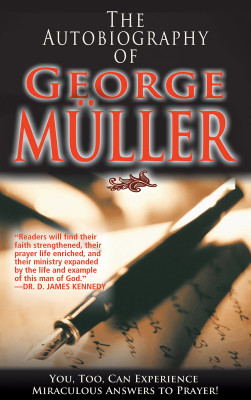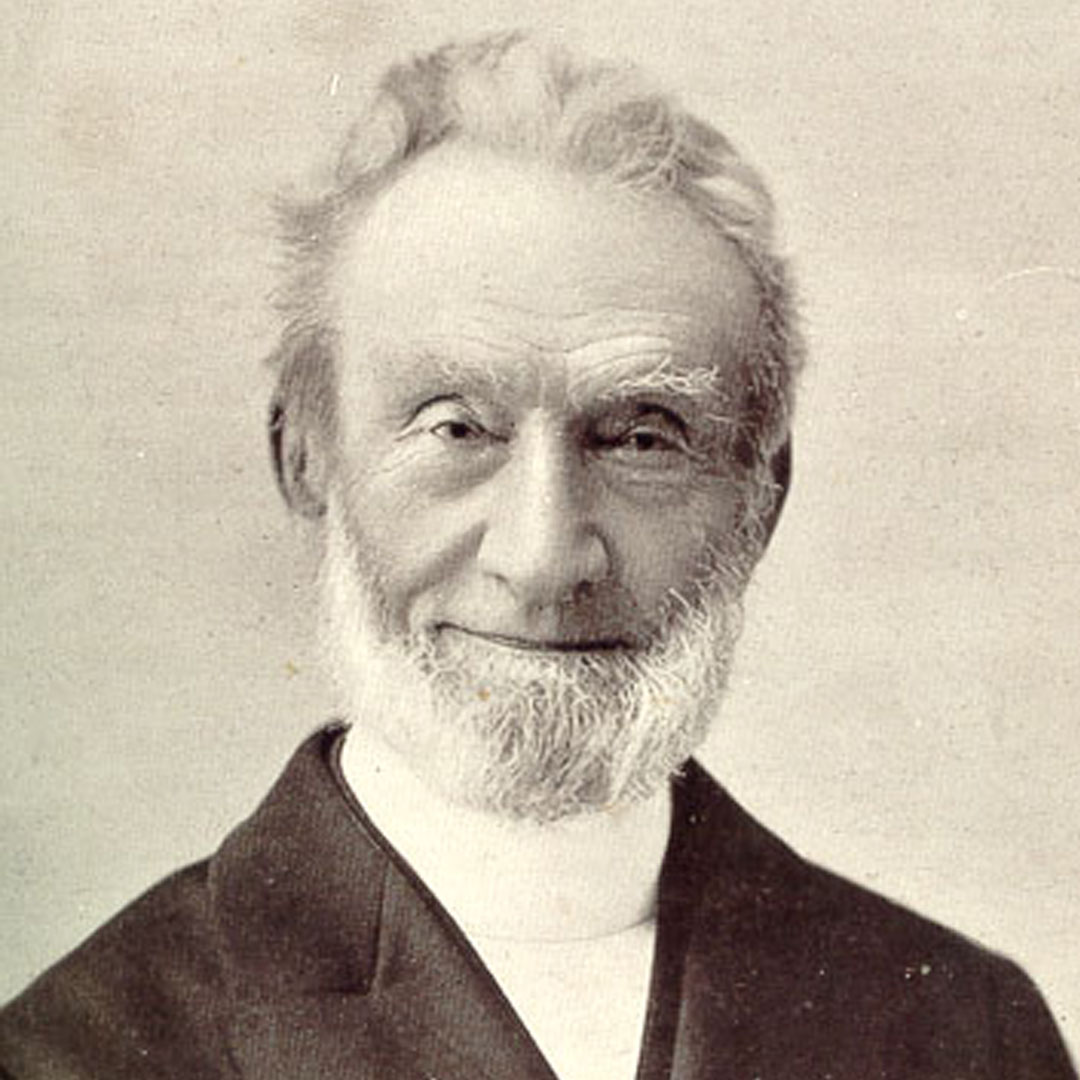



George Mueller (1805—1898), whose full name was Johann George Ferdinand Mueller, was a preacher, evangelist, and prominent member of the Plymouth Brethren Church. He is best remembered for his work of starting and directing a large orphanage in England.
Born in what was then known as Prussia (modern-day Germany), Mueller lived out his early years in thievery and dishonesty. In 1825, while attending divinity school at the University of Halle, he went to a prayer meeting at the house of a friend, realized his sinful condition, and placed his faith in Jesus (see Romans 3:22–24). According to Mueller’s own testimony in his 1855 book, A Narrative of Some of the Lord’s Dealing with George Muller, “I understood something of the reason why the Lord Jesus died on the cross, and suffered such agonies in the Garden of Gethsemane: even that thus, bearing the punishment due to us, we might not have to bear it ourselves” (p. 13). Once he became a follower of Christ, Mueller found that he no longer wanted to live in sin, and he forsook his old ways of living.
In 1830 Mueller became a preacher in Teignmouth, England. There he became associated with the Plymouth Brethren. Following the distinct teachings of the Plymouth Brethren, Mueller did not accept a salary for his preaching, but rather lived off voluntary offerings. Also, George Mueller ended the popular method of collecting money through pew rentals in the church he served. Such rents were seen by Mueller as discriminatory toward the poor.
Early in his ministry, George Mueller aimed to assist missionaries and Sunday school programs in various churches. He also distributed Bibles and gospel tracts. It’s estimated that Mueller gave away more than 250,000 Bibles in his lifetime.
Mueller, alongside his first wife, Mary, began caring for orphans in Bristol in 1832. Orphans during this time experienced terrible hardship and poor living conditions. Often, they were sent to workhouses or factories, which had harmful working environments. Scripture repeatedly commands Christians to care for orphans (Psalm 146:9; Isaiah 1:17; James 1:27), and George Mueller and his wife obeyed those commands, caring for orphans in their own home until they exceeded their housing capacity and received complaints from neighbors. Mueller knew they would need a larger building and so, over the course of time, built five houses in the Ashley Down area of Bristol. Throughout its history, the Ashley Down Orphanage helped to care for around 18,000 children.
All funding for the building of the houses and caring for the orphans came from freewill offerings for which Mueller prayed. He never asked people for money nor canvassed believers for donations. Mueller trusted that God would provide him with what he needed, and God did (see Matthew 6:25–33).
One of the most well-known stories of Mueller’s faith involves the time when he trusted God to provide the orphans with breakfast one morning. Nothing was available for the children to eat, but Mueller and the children prayed. Soon after, a nearby baker brought bread to the orphans, stating how God had laid a burden upon his heart to bring fresh bread. A little time after, the milkman arrived, asking if the orphans could use fresh milk, since his truck had broken down. God had provided the orphans with breakfast.
Mary died in 1870. A year later, George Mueller married again, and in 1875 he and his second wife, Susannah, embarked on a 17-year missionary tour, in which he spoke evangelistically about his trust in the Lord to provide. The couple traveled extensively, visiting a total of 42 countries including cities in Europe, India, China, and Australia. In America, Mueller met President Hayes in the White House. George Mueller died in Bristol in 1898 at the age of 92.
George Mueller’s life demonstrated the truth of James 5:16: “The prayer of a righteous person is powerful and effective.” Truly, this Prussian preacher had a rich prayer life that stemmed from his strong faith in Jesus Christ. And the Lord showed Himself to be faithful.
Other information about George Muller's legacy
Orphan care spanning three centuries from 1834, through the 19th, 20th and into the 21st Century, bringing prayer and care together to transform lives and shape communities.
The work of George Müller continued after his death. It is amazing that the story of a life that was lived trusting only in God, a life with a deep love for Jesus Christ, is a lasting testimony of a God who cares for us, and who is totally trustworthy. The story is still fresh and challenging today, even though George Müller was born over 200 years ago.
Faith, Care, and Evangelism have been the key principles which have been the common thread over the years in the work of The George Muller Charitable Trust. Most importantly beginning with faith. The caring and evangelistic activity of Müllers flows from the starting point of faith. Without trust in God through Jesus Christ and in His provision in answer to prayer, our activity will be ill founded. The ways in which we do things may change but this godly pattern remains unchanged. We maintain the key principle of seeking money through prayer alone, as fund-raising activities are actively shunned.
The George Müller Charitable Trust, as it became on 1 March 2009, (also affectionately known as Müllers by those who support the work), evolved from the Müller Trust for Children and Families which changed its name and broadened its objectives to incorporate those of the Müller Homes for the Elderly (founded in 1983) and the Scriptural Knowledge Institution for Home and Abroad (founded in 1834).
These objectives are:-
1. to advance education;
2. to advance evangelical Christianity in accordance with our Statement of Faith and in a manner consistent with holy scripture, including, insofar as the means are available at any time, through the support of Christian workers and organisations;
3. to advance citizenship or community development, particularly among children and families, young people and the elderly;
4. to relieve those in need by reason of youth, age, ill-health, disability, financial hardship or other disadvantage or human suffering, including those who are deprived of normal parental care.
Our Statement of Faith is laid out in a separate document.
For out more about us and the ongoing work to the Charity.